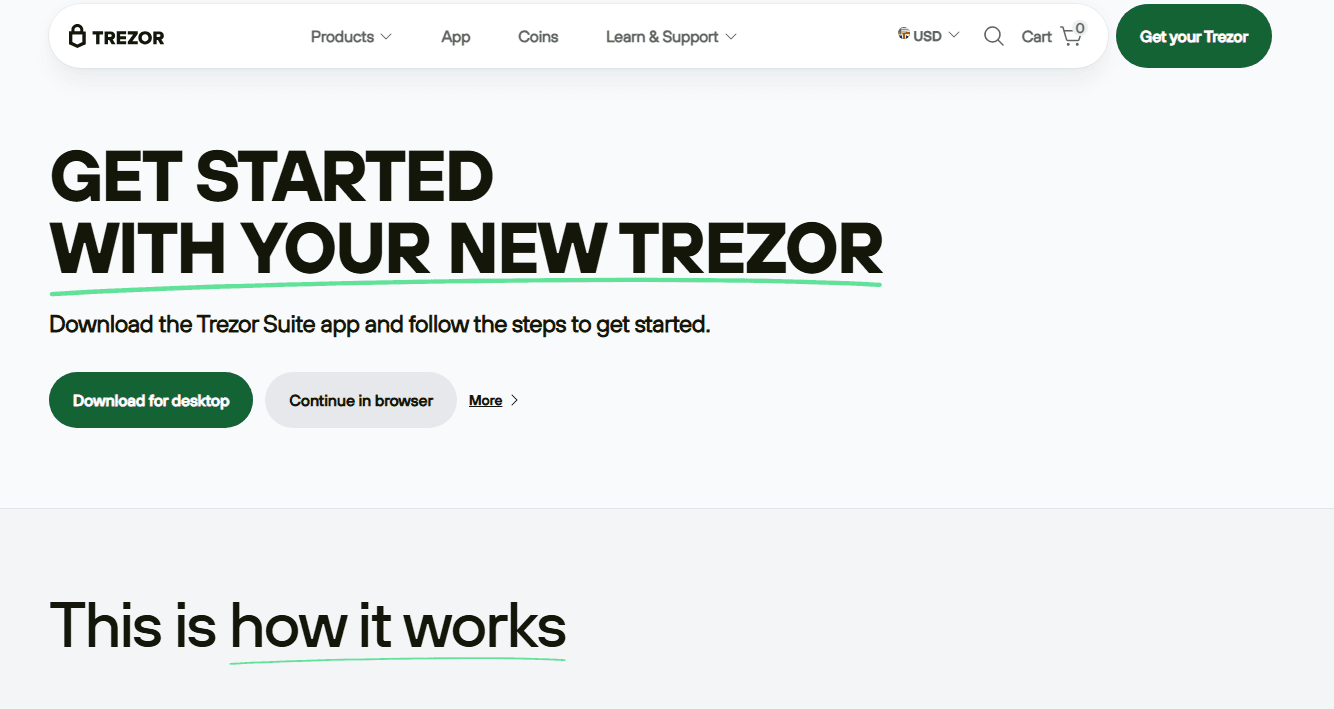
Trezor Login: Step-by-Step Guide to Securely Access Your Cryptocurrency Wallet
Logging into a Trezor wallet is a critical step in managing your cryptocurrency assets safely. Trezor login is designed to ensure that only the rightful owner can access the wallet, providing a secure interface for checking balances, sending or receiving funds, and managing multiple accounts. Unlike traditional online wallets, Trezor’s hardware-based approach ensures that private keys never leave the device, minimizing the risk of theft or compromise.
This guide explores the Trezor login process in detail, covering device authentication, PIN codes, recovery seed usage, account management, and security best practices for long-term protection.
Understanding Trezor Login
Trezor login refers to accessing your Trezor hardware wallet to manage cryptocurrency. It involves connecting the hardware device to a computer or mobile device, verifying your identity, and accessing account information through the Trezor Suite interface.
The process is built to protect users from phishing attacks, malware, and unauthorized access. Unlike software wallets that store private keys on devices connected to the internet, Trezor wallets keep the keys isolated within the hardware, providing a secure environment for login and transactions.
Why Secure Login Matters
Secure login is essential because it protects the private keys controlling your cryptocurrency. If login procedures are compromised, malicious actors could gain control over funds. The Trezor login process ensures that users maintain control while preventing unauthorized access.
Additionally, secure login builds confidence, enabling users to manage their assets safely across multiple accounts and devices.
Key Components of Trezor Login
The Trezor login process relies on several core components to ensure security:
Device Authentication: Verifies the hardware wallet is genuine and untampered.
PIN Code Verification: Confirms that the user has physical access to the wallet.
Recovery Seed (for Recovery Login): Allows wallet restoration in case of device loss or reset.
Trezor Suite Interface: Provides account overview, transaction history, and management features.
Each component plays a crucial role in maintaining the security and integrity of the wallet.
Device Authentication
Before logging in, it is essential to verify that the Trezor device is genuine. Device authentication ensures the hardware has not been tampered with during shipping or setup.
The hardware screen serves as the trusted interface for login verification. All critical prompts should be followed on the device itself rather than relying on the computer or mobile screen to prevent interference from malware or malicious applications.
Entering Your PIN Code
After device authentication, users must enter a personal identification number (PIN) to unlock the wallet. The PIN is created during the initial setup and provides the first layer of security against unauthorized access.
Key points about the PIN include:
Always choose a strong, unique PIN.
Enter the PIN directly on the Trezor device, not on the computer or phone.
The device limits incorrect PIN attempts, resetting after multiple failures to protect assets.
The PIN ensures that physical possession alone is not enough to access the wallet, adding an important layer of protection.
Recovery Seed for Login and Recovery
While the recovery seed is typically not used during standard login, it is essential for recovering a wallet. The recovery seed is a series of words generated during setup that represent all the private keys in the wallet.
If the hardware wallet is lost, stolen, or reset, entering the recovery seed on a new device restores access to all accounts. Proper management of the recovery seed is critical, and it should always be stored securely offline.
Accessing the Trezor Suite
Once the PIN is entered, users can access the Trezor Suite, the software interface for managing cryptocurrency. The Trezor Suite provides a clear overview of balances, transaction history, and account management options.
It is important to note that private keys never leave the device. All transactions must be approved on the hardware wallet, ensuring that login access does not compromise security.
Multi-Device Access
Trezor wallets are compatible with multiple platforms, including desktop and mobile devices. The login process remains consistent across all platforms:
Connect the hardware wallet to the device.
Enter the PIN on the hardware wallet.
Access the Trezor Suite to view accounts and manage funds.
This consistency ensures secure access across devices without compromising security.
Receiving Cryptocurrency
After logging in, users can generate public addresses to receive cryptocurrency. The address can be shared with senders, but Trezor recommends verifying each address on the device screen before use.
Verifying addresses prevents errors and protects against malicious software attempting to alter addresses during transactions.
Sending Cryptocurrency
To send cryptocurrency, users must review the transaction details on the hardware wallet and approve them physically. The device displays the recipient address and transaction amount, ensuring that users confirm the information before sending.
This additional verification step prevents unauthorized transactions and provides transparency during every action.
Security Best Practices for Trezor Login
To maximize security when accessing a Trezor wallet, users should follow several best practices:
Verify the device authenticity before login.
Use the hardware device screen for PIN and transaction approvals.
Keep your PIN confidential and never store it digitally.
Avoid logging in on public or untrusted networks.
Keep device firmware and software updated.
These practices reduce the risk of unauthorized access and ensure that cryptocurrency remains safe.
Common Login Issues and Troubleshooting
Users may face occasional login issues. Common problems include:
Incorrect PIN: Too many failed attempts will reset the device, requiring recovery with the seed.
Device Not Recognized: Check USB connections, update firmware, or reconnect the device.
Software Errors: Restart the Trezor Suite or reconnect the wallet to resolve issues.
Being familiar with these issues and their solutions ensures smooth access to the wallet.
Self-Custody and Login Responsibility
Trezor login reinforces the principle of self-custody. Users are responsible for their PIN, recovery seed, and physical device. Unlike online services, Trezor cannot reset a forgotten PIN or recover a lost seed.
Understanding this responsibility highlights the importance of secure login practices and careful management of credentials.
Managing Multiple Accounts
After logging in, users can manage multiple cryptocurrency accounts from a single device. Each account is derived from private keys stored on the hardware wallet, ensuring secure access without exposing keys to the software interface.
This capability allows users to organize funds, monitor balances, and transact across multiple blockchains safely.
Logging Out and Device Safety
Once finished, users should log out and disconnect the hardware wallet. Trezor devices automatically lock when disconnected, requiring the PIN for the next login.
This ensures that even if someone gains physical access, the wallet cannot be used without the PIN, maintaining security at all times.
Advantages of Secure Trezor Login
A secure login process provides:
Full control over assets with hardware-based protection.
Enhanced security through PIN verification and device authentication.
Transparency with device-based confirmations.
Cross-platform accessibility without compromising security.
These advantages make Trezor login an essential part of responsible cryptocurrency management.
Conclusion
Trezor login is more than a simple access step; it is a critical component of cryptocurrency security. By following the proper login process—including device authentication, PIN entry, and careful handling of the recovery seed—users can securely manage their assets.
Understanding Trezor login, adhering to best practices, and maintaining responsibility ensures that cryptocurrency remains safe, accessible, and fully under the user’s control at all times. Secure login builds confidence and forms the foundation for effective, long-term self-custody management.